Real-Time Guidance Loops Shape Decision-Making in Mobile Live Streams and Reel Sequences
Ellis Krause · Sep 16, 2026
Real-Time Guidance Loops Shape Decision-Making in Mobile Live Streams and Reel Sequences
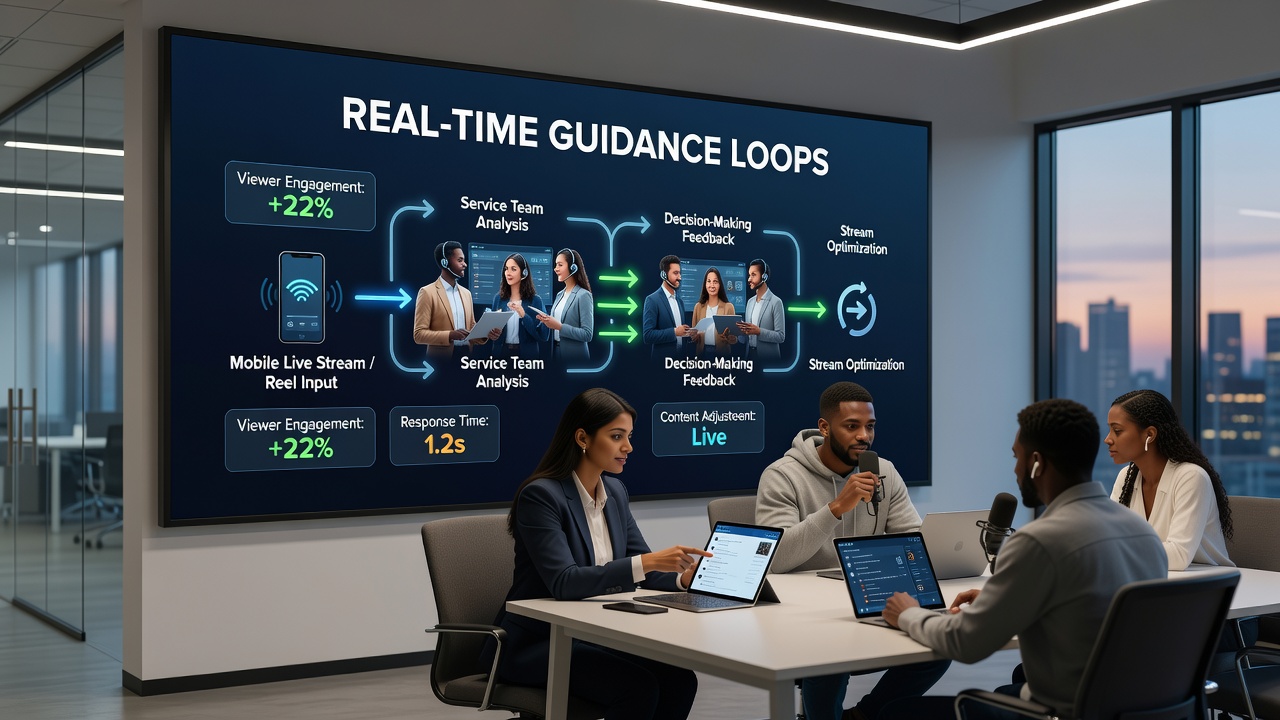
Service teams now operate within structured real-time guidance loops that connect audience feedback directly to on-the-fly adjustments during mobile live streams and reel sequences. These loops collect viewer comments, engagement metrics, and behavioral signals through mobile platforms then route them to decision points where moderators or producers alter pacing, content emphasis, or promotional offers within seconds. Data from industry reports shows that platforms processing over 50 million daily active streams have adopted similar systems since 2024, allowing teams to maintain narrative flow while responding to shifting viewer interests.
Core Components of Guidance Loops
Each loop consists of four linked stages that run continuously. First, data ingestion pulls comments, heart-rate indicators from live polls, and completion rates from partial reel views. Second, analysis modules flag patterns such as repeated questions about product specifications or drops in retention at specific timestamps. Third, service agents receive prioritized alerts through dashboard interfaces that highlight which adjustments carry the highest projected impact. Fourth, implemented changes feed back into the stream or next reel iteration, closing the cycle and updating the model for future sequences. Observers note that organizations using all four stages report average retention gains of 18 percent compared with teams relying on post-stream reviews alone.
Implementation Across Mobile Platforms
Mobile environments impose constraints that desktop streaming setups rarely face. Limited screen real estate means service teams must prioritize text overlays or quick-cut reel edits rather than extended verbal explanations. Teams therefore pre-load response templates that match common query clusters, then trigger them through single-tap interfaces during live segments. In September 2026, several major e-commerce platforms released updated APIs that allow deeper integration between live chat logs and automated reel editing tools, reducing the time between insight capture and content adjustment to under four seconds in controlled tests.
One documented case involved a consumer electronics brand that coordinated service agents across three time zones. Agents monitored separate language feeds during a single global launch stream, routing translated queries into a shared decision queue. The system flagged a sudden spike in questions about battery life at the 14-minute mark, prompting an immediate switch to a prepared demonstration clip. Completion rates for that reel rose from 41 percent to 67 percent after the change.
Decision Points and Agent Roles
Service agents function as the human layer within automated pipelines. They evaluate flagged items against brand guidelines, viewer demographics, and inventory data before authorizing changes. Agents also log exceptions when algorithms misclassify sentiment, creating training data that improves future detection accuracy. Research from academic groups in Australia and Canada indicates that hybrid human-AI loops achieve 23 percent higher accuracy in real-time sentiment classification than fully automated alternatives.
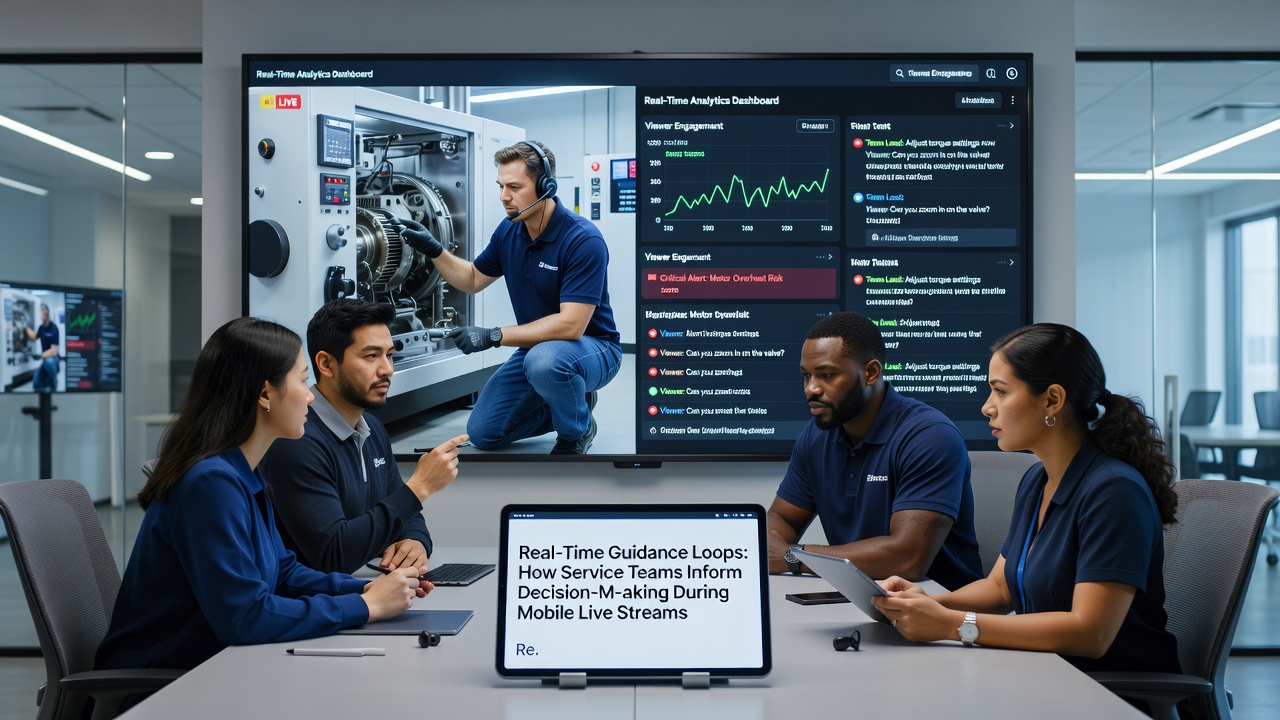
Training programs now emphasize pattern recognition over script memorization. Agents practice identifying when a cluster of comments signals confusion versus simple curiosity, then decide whether to extend a product demo or move to a scheduled segment. Those who've studied these workflows report that clear escalation protocols prevent individual agents from making isolated changes that conflict with overall stream objectives.
Measurement and Iteration Cycles
Teams track loop effectiveness through metrics that include time-to-adjustment, post-change retention deltas, and downstream reel completion rates. Weekly reviews compare baseline sequences against those modified through live input. Industry associations such as the Interactive Advertising Bureau have published frameworks that standardize these measurements across regions, enabling cross-market comparisons. European research consortia have contributed additional benchmarks focused on privacy-compliant data handling within the same loops.
Adjustments that produce measurable lifts are archived as reusable playbooks. Agents reference these libraries when similar patterns emerge, shortening response times in subsequent streams. The process creates cumulative knowledge that compounds across campaigns rather than resetting with each new sequence.
Conclusion
Real-time guidance loops have become standard infrastructure for organizations running frequent mobile live streams and reel sequences. The combination of rapid data capture, prioritized agent review, and immediate content adaptation allows teams to align viewer expectations with stream direction while preserving production rhythm. Continued refinement of API integrations and training protocols suggests these systems will expand into additional content formats throughout 2026 and beyond.